
I’m Johannes Fiegenbaum.
Since 2014 I’ve helped companies report and manage sustainability in a way that produces something useful: a report that banks and customers accept, a climate risk analysis that feeds into investment decisions, a carbon footprint you can actually reduce against.
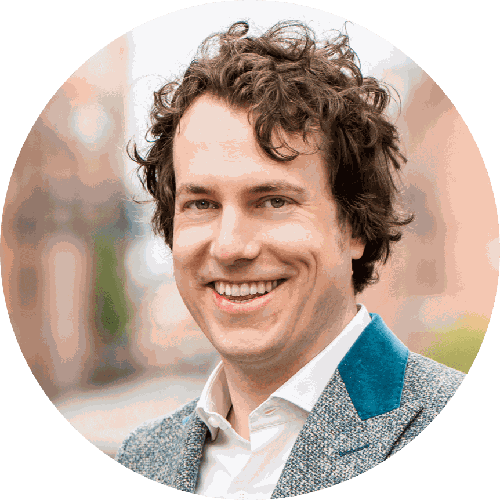
Most of the people I work with are mid-sized companies, startups and investors facing VSME, climate risk or an ESG due diligence for the first time. I’m based in Hamburg and work with companies across Europe, in English or German, remotely or on site, depending on what the project needs. You don’t need to prepare anything except the question that is on your mind right now. We sort out the rest together.
A few things you can expect from me
They should help you judge whether working together makes sense.
From the first call to the finished report I’m your single point of contact, with no team in between.
I developed VSEasy for VSME reports together with clients and use it every day, and I co-founded a carbon accounting software company.
I put my own money into climate-tech startups. I know what an ESG due diligence feels like from both sides of the table.
Even with 40 sites and 3 climate scenarios, it doesn’t turn into a special project.
You always know what I’m working on and why.
If a project won’t deliver real value for you, I say so, even when that runs against my own interest.
You know the cost upfront. No timesheets, no surprises.
A bit more about me
Studied English literature and linguistics, alongside a research assistant post at the University of Tübingen working on linguistic data structures. I started working with data earlier than planned.
Practice at TBG Digital in London and Sprinklr in Hamburg. London in particular shaped me. In both roles I learned how data, technology and decision-making connect inside organisations.
Founded Fiegenbaum Solutions, initially with a broad remit. Over time the focus sharpened: ESG strategy, sustainability reporting and climate risk management for mid-sized companies, startups and venture capital.
Co-founded a carbon accounting software startup. Having helped build such a system still shapes my consulting today, because I know where emissions data collection breaks down in practice.
Graduated with the first cohort of the Sustainability Consulting Accelerator at OnePointFive Academy in New York.
Venture Partner at Climate Insiders, an investor community focused on climate deeptech. Alongside that I invest in climate-tech startups myself, for example in Strong by Form, Kemvera, Milvus Advanced and Anodyne Chemistries. So I don’t just write about climate technology, I share the risk.
Because people need healthy food, safe water, clean air and a thriving biosphere to survive.
That sounds big, but for me it’s quite practical: with the Bergwaldprojekt, a German conservation charity, I’ve worked all over the country rewetting peatlands, maintaining dry grassland and replanting forest. What happens there with a spade and wellies is the other side of the same work.
As a member of 1% for the Planet, I give 1 percent of my annual revenue to environmental organisations.
I measure myself the way I measure clients.
My own VSME report for 2025 comes to 5.0 t CO₂e, all of it in Scope 3: purchased services such as software and advertising at 3.3 t, hardware at 1.0 t, business travel at 0.5 t and leased assets such as my e‑bike at 0.2 t. Scope 1 and 2 are zero. I have no energy contracts of my own and no company car, just the e‑bike, which wins a surprising number of races at Hamburg traffic lights.
Most of this is calculated from spending, that is bank transactions multiplied by industry-average emission factors. The GHG Protocol treats this method as a first estimate with high uncertainty, and that is how I read the 5.0 t.
Under the SME Climate Commitment I have set myself the target of cutting emissions by 50 percent by 2028 against 2025 and reaching net zero by 2030.
My own climate risk analysis is a short one: there is nothing of value on site, my work lives as data in data centres, and the office sits behind Hamburg’s main dike line. The one material risk is heat, and it mostly affects whoever is at the desk in August. My transition risk comes down to whether companies keep needing their climate data. I’m betting they will, with or without a law that makes them: the measures at the top of my rankings often prevent more damage per euro than the same euro earns in the core business.
Outside work: gyokuro and coffee, yoga and being a father.
Interested in working together?
Tell me what it’s about. In a free first call I go through what you need with you and whether I’m the right person for it.