
I’m Johannes Fiegenbaum.
Since 2014 I’ve helped companies report and manage sustainability in a way that produces something useful: a report that banks and customers accept, a climate risk analysis that feeds into investment decisions, a carbon footprint you can actually reduce against.
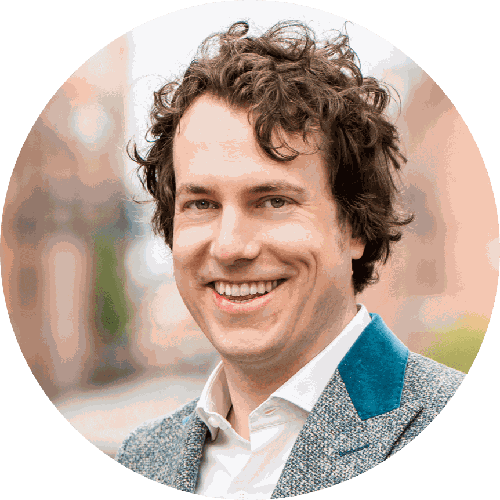
Most of the people I work with are mid-sized companies, startups and investors facing VSME, climate risk or an ESG due diligence for the first time. I’m based in Hamburg and work with companies across Europe. You don’t need to prepare anything except the question that is on your mind right now. We sort out the rest together.
A bit more about me
Research assistant at the University of Tübingen, linguistic data structures. I started working with data earlier than planned.
Practice at TBG Digital in London and Sprinklr in Hamburg. That’s where I learned how data, technology and decision-making connect inside organisations.
Founded Fiegenbaum Solutions, initially with a broad remit. Over time the focus sharpened: ESG strategy, sustainability reporting and climate risk management for mid-sized companies, startups and venture capital.
Co-founded MULTIPLYE, a carbon accounting tool. Having helped build such a system still shapes my consulting today, because I know where emissions data collection breaks down in practice.
Venture Partner at Climate Insiders, an investor community focused on climate deeptech. Alongside that I invest in climate-tech startups myself, for example in Strong by Form, Kemvera, Milvus Advanced and Anodyne Chemistries. So I don’t just write about climate technology, I share the risk.
Because we need healthy food, safe water, clean air and a thriving biosphere to survive.
That sounds big, but for me it’s quite practical: with the Bergwaldprojekt, a German conservation charity, I’ve worked all over the country rewetting peatlands, maintaining dry grassland and replanting forest. What happens there with a spade and wellies is the other side of the same work.
Outside work: gyokuro and coffee, yoga and being a father.
A few things you can expect from me
They should help you judge whether we’re a good match.
From the first call to the finished report I’m your single point of contact, with no team in between.
I built VSEasy for VSME reports myself and use it every day, and I co-founded MULTIPLYE for carbon accounting.
I put my own money into climate-tech startups. I know what an ESG due diligence feels like from both sides of the table.
Even with 40 sites and three climate scenarios, it doesn’t turn into a special project.
You always know what I’m working on and why.
If a project won’t deliver real value for you, I say so, even when that runs against my own interest.
You know the cost upfront. No timesheets, no surprises.
Interested in working together?
Tell me what it’s about. In a free first call we’ll look together at what you need and whether I’m the right person for it.