Skip to content
13 min read

The case of Rügenwalder Mühle: Embracing Plant-Based Proteins

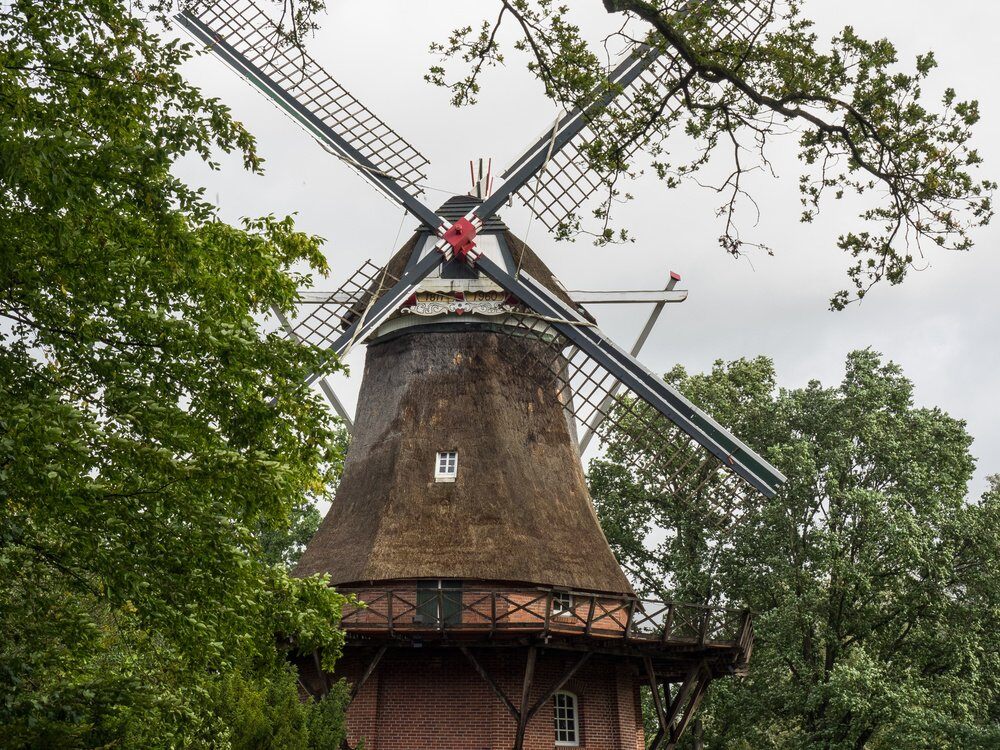
Featured Image

If you are looking for a mid-sized traditional manufacturer that has actually pulled off a real business model transformation — not a PR story, but an operationally completed pivot — Rügenwalder Mühle is hard to ignore. The company from Bad Zwischenahn in Lower Saxony, Germany, made the shift from classic sausage maker to market leader for vegan and vegetarian meat alternatives in Germany in just over a decade. The change happened independently of CSRD obligations and without external regulation as a driver — carried entirely by a strategic bet on a consumer trend that, at the time, did not yet exist in any meaningful sense. This overview brings you up to speed for 2026: what has changed structurally since the last major update in 2024 (Pfeifer & Langen majority stake, endori alliance, new CEO, EU court ruling on plant-based naming), how the DACH plant-based market is actually performing in 2024–2026, and what lessons mid-market manufacturers can take from the transformation.

Executive summary
  • Rügenwalder Mühle is the market leader for vegan and vegetarian meat alternatives in Germany — and is growing against the market trend, while the wider plant-based segment softened slightly in 2025.
  • Since March 2024 the company is majority-owned by the family holding Pfeifer & Langen Industrie- und Handels-KG, alongside the pea-protein specialist endori.
  • Since January 2025 the company is led by CEO Jörg Pfirrmann, with an explicit "we grow profitably" stance and a clear focus on innovation leadership in the veggie segment.
  • The EU Court of Justice ruling of 15 January 2026 confirmed that names such as "veggie burger", "vegan sausage" or "plant-based schnitzel" remain permissible — a significant stabiliser for the branding of the entire industry.
  • The classic "Schinken Spicker" was delisted in late 2023; the assortment is now majority plant-based and, through the endori alliance, present in foodservice as well.
  • The plant-based footprint advantage is well documented: a veggie product produces orders of magnitude fewer greenhouse gases, less water and less land use than its meat-based counterpart in lifecycle assessments.

What changed structurally in 2024–2026

If you knew Rügenwalder Mühle as the veggie pioneer from Bad Zwischenahn before 2024, four central developments have reshaped the company since then.

Majority stake by Pfeifer & Langen (March 2024). The family holding Pfeifer & Langen Industrie- und Handels-KG took the majority of Rügenwalder Mühle. The company became part of a newly formed platform under "The Nature's Richness Group", which also includes the pea-protein specialist endori from Bamberg. The strategic logic is a clear double move: capital from the sugar and carbohydrate business is redirected into plant-protein value creation, and at the same time a group is formed with complementary capabilities — Rügenwalder brings the cold-cut, spread and sausage know-how, endori brings the warm pea-protein pan world.

New CEO Jörg Pfirrmann since January 2025. In his Handelsblatt interview in June 2025 Pfirrmann set out the position clearly: "we grow profitably" — and he does so in a market environment where many competitors are not profitable. The company has stopped publishing detailed revenue and earnings figures since the profit drop in 2022; the qualitative message lands nonetheless: innovation leadership in the core assortment, not scale at any price.

"Mühle trifft Erbse" and the foodservice alliance with endori (January/April 2025). From January 2025 Rügenwalder and endori have appeared together at the market for the first time — at Internorga 2025 with a morning-noon-evening concept for out-of-home catering. From April 2025 endori has taken over the foodservice sales of Rügenwalder products for large customers (canteens, hotels, system gastronomy). In retail both brands remain independently positioned. This pools the group's plant-based punching power across day-parts and channels without merging the brand architectures.

Assortment shift and brand leadership in a softer market. In late 2023 the classic "Schinken Spicker" was delisted — the assortment is now majority plant-based. In 2024 the company brought a double-digit number of new vegan products to market, with the "Vegan Hauchgenuss" cold cut as the most successful newcomer. In Q1 2025 Rügenwalder grew against the market trend, while the overall plant-based segment softened slightly — private labels in particular lost meaningful volume in this quarter. For Veganuary 2026 the company brought back its iconic "Feierabend" jingle and positioned plant-based products as mainstream end-of-day food rather than a niche.

Key takeaway 2026
Rügenwalder Mühle has completed the shift from a growth narrative to a profitability narrative — backed by a capital-strong majority owner and a brand alliance that for the first time systematically takes the company into foodservice. That is the phase that many mid-market transformation cases never even reach.

From Carl Müller to today: family business turned veggie market leader

Rügenwalder Mühle was founded in 1834 by Carl Müller in Rügenwalde, Pomerania, as a butcher's shop. Craft knowledge and management were handed down across generations — from the founder via Carl Wilhelm and Wilhelm Müller to Christian Rauffus, a descendant of the founding family, who shaped the company into today's food manufacturer. After the Second World War the family relocated the head office to Bad Zwischenahn in the Ammerland region; the red windmill logo remained the binding brand mark.

For a long time the company was famous mainly for the Rügenwalder Teewurst — still part of the assortment today. The actual strategic break came in 2014: Rügenwalder was one of the first classic sausage makers in Germany to bring vegetarian alternatives into the core assortment. At the time this was a taboo break, internally and externally. Experienced sausage masters had to relearn, sales had to convince retail chains that veggie sausage belonged next to ham in the chilled aisle — and the first products were still well below today's quality bar.

What makes that early step viable in retrospect is the consistency: Rügenwalder did not respond with an add-on sub-brand but progressively transitioned the core range. By 2019 revenues from plant-based products had grown substantially; by 2020 the veggie segment had reached around half of revenue; and in the second quarter of 2022 sales of plant-based products durably overtook those of animal-based products for the first time. The strategic transformation of a family business stopped being a story at that point and became operational fact.

What made the transition operationally viable

Three operational levers carried the transition into commercial robustness — and they are the points at which many other transformation attempts fail.

Closing the price gap step by step. At market launch in 2014 a plant-based alternative was clearly above the price of comparable meat products — early buyers paid an obvious premium for conviction. Through scale, recipe optimisation and targeted staff retraining that premium has shrunk to the single-digit to low double-digit percent range. The veggie product world thereby moves out of the premium niche into the mainstream chilled aisle — and becomes actually buyable for flexitarians on a normal household budget.

Diversifying the buyer base. The current customer base is dominated by flexitarians who consciously reduce meat consumption — not by committed vegans. That is the strategically decisive insight: veggie sausage has to work alongside ham in the same shopping basket, not only in specialised organic ranges. Rügenwalder reaches above-average market shares particularly in urban regions and with buyers in the middle working-age cohort.

Combining sausage craft with food technology. The sausage-master tradition is not replaced but repurposed: anyone who masters cooked-and-fried textures from pork mince brings the same sensory expertise into pea and soy protein recipes. This organisational translation skill is the actual moat against plant-based startups that may start tech-driven but take a long time to deliver everyday sensory acceptability at discount-channel level.

Climate footprint: what plant-based actually delivers vs meat

The environmental advantages of plant-based alternatives are not a marketing assumption but quantified across a body of lifecycle assessments. Anyone who builds their own LCA for a product knows the orders of magnitude: plant-based sausage and mince alternatives produce orders of magnitude fewer greenhouse gases per kilogram of finished product than their meat-based counterparts. Water consumption typically drops to a fraction, and land use is also markedly reduced — mainly because no feed-crop area is needed for animal husbandry. These ranges hold across the industry for most veggie cooked and fried products.

In absolute terms this adds up: across the years since the assortment shift, Rügenwalder alone has avoided a substantial volume of CO₂e through its veggie share. In ESG communication this is the delicate point — see the section below on consumer-protection lawsuits and the climate-neutrality debate. Anyone communicating climate benefits today should anchor them to a concrete comparison product and make the calculation assumptions transparent, rather than relying on blanket neutrality claims. Supply-chain transparency for soy, peas and wheat is the actual cost driver here, not the end product itself.

DACH market environment 2024–2026 and the competition

The German plant-based market hit a record in 2023 and consolidated slightly in the following years — without slipping into structural decline. Production of meat substitutes in Germany continued to grow in 2024 according to the Federal Statistical Office, both in tonnes and in value. What has shifted is the distribution within the market: private labels from Aldi and Lidl gain through trading-down effects, some premium brands stagnate, and several competitors are under structural financial pressure.

Domestic competition. With "Billie Green", Tönnies launched its own veggie brand in 2024 that directly attacks Rügenwalder in the price segment and has posted a clear revenue jump since launch. This is the German variant of a classic-attacks-disruptor dynamic — Tönnies brings slaughterhouse scale economies and retail listing power into a market that Rügenwalder defined as a pioneer.

International players under pressure. Beyond Meat has been in the loss zone for years and announced a four-point turnaround plan aiming for positive operating EBITDA by the end of 2026. Headcount has been reduced, the China business has been wound down, and in 2026 — at a sustained penny-stock price — the company faces delisting from the Nasdaq. This weakens Beyond Meat's position in the DACH chilled aisle and shifts volume toward local brands and private labels. Heura, Vivera, LikeMeat and Garden Gourmet remain present but are under price and listing pressure.

Mid-market consolidation. Veganz Group AG is fighting with loss reduction and a capital increase that has not been fully placed; reported order cancellations in the low single-digit million-euro range in the core business show how thin the floor is for mid-sized plant-based brands. Anyone who is capital-strong, profitable and holds a dominant retail brand in this market environment has a structural advantage — and that describes the constellation of Rügenwalder Mühle in 2026 quite precisely.

Regulation and storytelling: the EU court ruling and greenwashing risks

Two regulatory developments have shaped brand communication for the entire veggie industry in 2026 — and both directly influence how Rügenwalder tells its story today.

EU Court of Justice ruling of 15 January 2026: "veggie burger" remains permissible. The Court of Justice ruled in the dispute over the French plant-based-naming ban of 2021: terms such as steak, sausage, schnitzel and burger may be used for vegetarian and vegan products, as long as a member state has not introduced a specific statutory designation for plant-based protein products. The court does not consider blanket bans for "transparency" purposes to be compatible with EU law. For DACH manufacturers this stabilises the legal position for established veggie terms and supports consistent packaging storytelling — including for Rügenwalder.

Consumer-protection lawsuits and the end of the "climate-neutral" claim. Deutsche Umwelthilfe (DUH), Germany's leading environmental advocacy NGO, has successfully sued over misleading climate-neutrality advertising since 2023 — among others against Danone, dm, Eurowings, HelloFresh and Netto. The Karlsruhe Regional Court banned dm from advertising products as "environmentally neutral"; Netto undertook to stop marketing instant coffee as "climate-neutral". The consequence for the entire food industry: blanket neutrality logos have become high-risk communication. Rügenwalder is not directly affected by a DUH lawsuit but has consistently shifted its public communication toward an innovation, market-leadership and taste narrative — and avoids aggressive climate-neutrality claims at product level. For your own greenwashing-risk avoidance this is the blueprint: precise product comparisons rather than blanket labels, "up to X percent fewer emissions vs comparison product Y" rather than "climate-neutral".

What mid-market manufacturers can learn from the Rügenwalder story

If you read the Rügenwalder story as a consulting case, five points stand out as transferable — independent of your industry.

  1. Transformation belongs in the core assortment, not in an add-on sub-brand. A separate "green line" alongside the legacy business signals tokenism and creates internal competition rather than commitment. Rügenwalder progressively moved the veggie shift into the main aisle — and actively marked the point of no return by delisting the Schinken Spicker.
  2. Sensory quality beats narrative. The first Vegan Hauchgenuss did not break through via marketing in 2014, but via the actual taste experience — and that was built up across years of recipe iteration. Anyone whose transformation depends on consumer acceptance has to deliver there, not in the claim.
  3. Operations before climate communication. The climate advantage of plant-based products is real and LCA-supported — but communicatively the DUH lawsuit frequency since 2023 sends a clear signal: defensible product comparisons yes, blanket neutrality claims no. A consistent ESG storytelling line matters more than a loud label.
  4. Capital structure as transformation enabler. The Pfeifer-&-Langen majority gives Rügenwalder the cushion not to be forced into a scaling or price-cutting race in a slightly softer market. Anyone wanting to fund a 5–10-year transformation needs either a cashflow-strong core business or a patient owner — and the Mühle has both.
  5. Alliances rather than greenfield. The endori cooperation opens the foodservice channel without having to build a dedicated B2B sales organisation. For mid-market manufacturers, a clean brand alliance is often the most resource-efficient lever for new distribution — provided the brand architectures stay independent enough not to cannibalise each other.

The transferability for other mid-market manufacturers is concrete: same logic, different industry. If you are a family business looking to transform a legacy operation — whether in food, manufacturing or trade — you will find in strategic sustainability planning and disciplined ESG-strategy execution the tools that worked operationally at Rügenwalder.

FAQ

What is Rügenwalder Mühle and what is the company known for?

Rügenwalder Mühle is a German food manufacturer based in Bad Zwischenahn. Founded in 1834 by Carl Müller in Rügenwalde (Pomerania) as a butcher's shop, the company is today the market leader for vegan and vegetarian meat alternatives in Germany. Rügenwalder was originally famous for the Rügenwalder Teewurst; since 2014 it has progressively shifted its core assortment to plant-based products.

What changed structurally at Rügenwalder in 2024–2026?

Four developments stand out: the majority stake taken by family holding Pfeifer & Langen in March 2024, the strategic alliance with pea-protein specialist endori under "The Nature's Richness Group", the CEO change to Jörg Pfirrmann in January 2025 with a clear profitability message, and the foodservice cooperation with endori from April 2025.

When and why did Rügenwalder Mühle shift to plant-based products?

The veggie shift began in 2014 — Rügenwalder was one of the first classic sausage makers in Germany to bring vegetarian alternatives into the core assortment. The drivers were changing consumer preferences (especially flexitarians), the ecological and ethical challenges of factory farming, and the strategic bet that the trend would prove durable. By 2020 the plant-based segment had reached around half of revenue; since the second quarter of 2022 plant-based product sales have exceeded animal-based ones.

How large is Rügenwalder Mühle's market share in vegan and vegetarian meat alternatives?

Rügenwalder is clearly the market leader in the German market for vegan and vegetarian meat alternatives. In Q1 2025 the company — by its own account — gained share against the market trend, while the overall market softened slightly. In retail Rügenwalder primarily competes with private labels from Aldi and Lidl and with Tönnies' young brand "Billie Green".

What does the EU Court of Justice ruling of January 2026 mean for veggie producers?

The European Court of Justice ruled on 15 January 2026 that names such as "veggie burger", "vegan sausage" and "plant-based schnitzel" remain permissible — as long as a member state has not introduced its own statutory designation for plant-based protein products. Blanket national bans on these terms are therefore not compatible with EU law. For DACH manufacturers this stabilises the legal position for established packaging storytelling.

What climate advantages do plant-based products have over meat products?

Lifecycle assessments show across the industry that plant-based sausage and mince alternatives produce orders of magnitude fewer greenhouse gases per kilogram of finished product, consume far less water and have a smaller land footprint than their meat-based counterparts. What matters is communicative care, however: after the wave of consumer-protection lawsuits since 2023, blanket "climate-neutral" claims have become a risk area — defensible product comparisons with transparent methodology are the safer route.

What can mid-market manufacturers learn from the Rügenwalder transformation?

Five points are transferable: transformation belongs in the core assortment rather than in an add-on sub-brand; sensory quality beats narrative; operations and assortment discipline matter more than loud climate communication; a capital-strong ownership structure enables sustained execution through interim phases; and targeted brand alliances open new channels more efficiently than a greenfield build.

If you are planning a comparable transformation in your own company — in food, manufacturing or trade — and want sparring on strategy, ESG communication or carbon footprint methodology, let's set up a short initial conversation.

Johannes Fiegenbaum

Johannes Fiegenbaum

ESG and sustainability consultant based in Hamburg, specialised in VSME reporting and climate risk analysis. Has supported 300+ projects for companies and financial institutions – from mid-sized firms to Commerzbank, UBS and Allianz.

More about